Supplements Meet Prescriptions: The Hidden Health Risk Hiding in Plain Sight
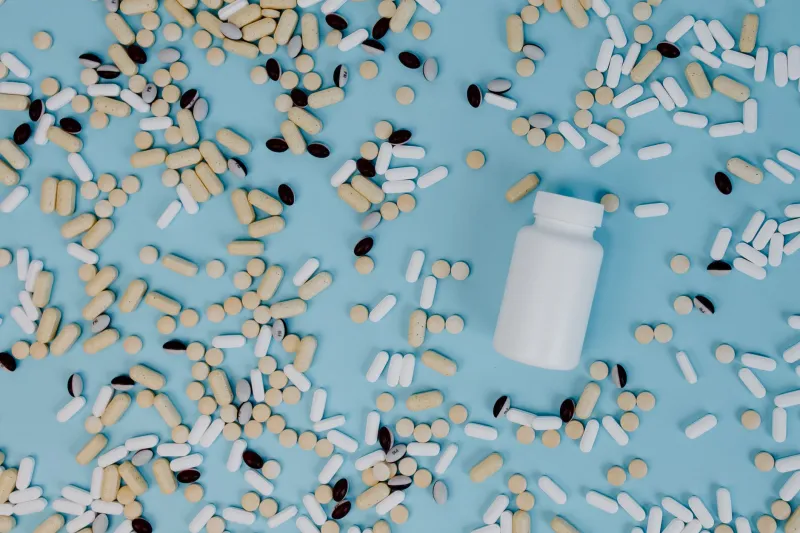
Walk into any American pharmacy today and you will find two very different kinds of products sharing the same shelves. On one side, there are FDA-regulated over-the-counter medications—ibuprofen, antihistamines, antacids—products that have undergone rigorous testing for safety and efficacy. On the other side, occupying an increasingly large footprint, are dietary supplements: vitamins, herbal extracts, protein powders, and botanical blends that operate under an entirely separate legal and regulatory framework. Most consumers treat both categories as interchangeable parts of their daily health routine. That assumption carries real risk.
According to the Council for Responsible Nutrition, approximately 75 percent of American adults take some form of dietary supplement. Yet surveys consistently show that fewer than half of those individuals proactively disclose their supplement use to a physician or pharmacist. The result is a widespread and largely invisible blind spot in preventive healthcare—one that contributes to adverse events, hospitalizations, and compromised treatment outcomes every year.
A Tale of Two Regulatory Frameworks
Understanding why supplements and OTC medications interact unpredictably begins with understanding how differently the federal government treats them.
OTC medications fall under the FDA's drug approval process. Before a product reaches pharmacy shelves, manufacturers must demonstrate through clinical evidence that it is both safe and effective for its intended use. Labeling is standardized, dosing is specified, and active ingredients are disclosed in precise quantities.
Dietary supplements, by contrast, are governed by the Dietary Supplement Health and Education Act of 1994 (DSHEA). Under this law, supplement manufacturers are not required to prove safety or efficacy before bringing a product to market. The FDA can act against a supplement only after it has already been sold—and only if sufficient evidence of harm has accumulated. Manufacturers are prohibited from making explicit disease-treatment claims, but the line between a "structure/function" claim and a therapeutic claim is often blurry in practice.
This regulatory gap means that the fish oil capsule or St. John's Wort tablet sitting in your medicine cabinet has never been evaluated the way your allergy medication was. That does not automatically make it dangerous—but it does mean the burden of safety verification falls more heavily on the consumer.
When "Natural" Becomes a Medical Variable
One of the most persistent myths in consumer health culture is that natural products are inherently safe. From a pharmacological standpoint, "natural" is simply a description of origin, not a guarantee of benign interaction. Many of the most potent pharmaceutical compounds in history were derived from plants. The same biochemical activity that gives an herb its purported benefit can also interfere with how your body processes a medication.
Consider a few well-documented examples:
St. John's Wort and antidepressants or blood thinners. This popular herbal remedy for mild depression is one of the most clinically significant sources of supplement-drug interactions known to medicine. It powerfully induces cytochrome P450 enzymes in the liver—the same enzymatic pathway responsible for metabolizing a wide range of medications. Patients taking warfarin, certain HIV antiretrovirals, oral contraceptives, or selective serotonin reuptake inhibitors (SSRIs) alongside St. John's Wort may experience dramatically altered drug levels, sometimes with dangerous consequences.
Fish oil and blood thinners. High-dose omega-3 supplements have measurable anticoagulant properties. In individuals already taking aspirin, clopidogrel, or prescription anticoagulants, adding concentrated fish oil can compound bleeding risk in ways that are difficult to predict without clinical monitoring.
Calcium supplements and thyroid medication. This interaction is less dramatic but clinically important. Calcium can bind to levothyroxine in the gastrointestinal tract, significantly reducing absorption. Patients who take their thyroid medication in the morning alongside a calcium supplement may unknowingly be undermining their treatment for years.
Vitamin E and chemotherapy agents. Some research suggests that high-dose antioxidant supplements, including vitamin E, may interfere with the oxidative mechanisms that certain cancer treatments rely on. Oncologists increasingly ask patients to pause supplementation during active treatment for precisely this reason.
These are not edge cases. They represent patterns that pharmacists and physicians encounter regularly—often only after something has gone wrong.
The Disclosure Problem
Why do so many patients fail to mention their supplements during medical appointments? Research points to several converging factors.
First, many consumers genuinely do not think of supplements as medications. If a doctor asks, "What medications are you taking?" the patient mentally catalogs their prescriptions and perhaps their OTC drugs—but the multivitamin, the magnesium glycinate, and the ashwagandha capsule may not register as relevant.
Second, there is a cultural hesitancy. Some patients anticipate that their physician will dismiss or discourage supplement use, so they omit it to avoid a conversation they expect to be unproductive. Others feel a degree of ownership over their supplement choices and prefer to keep that domain separate from conventional medical care.
Third, appointments are short. The average primary care visit in the United States lasts roughly 18 minutes. In that window, a patient managing multiple conditions may not think to volunteer information about a supplement they consider routine.
The consequence of all this is that healthcare providers are frequently making prescribing decisions—and patients are making self-care decisions—based on incomplete pictures of what is actually entering the body.
Building a Complete Supplement Profile
At PharmaOTC, we believe that informed consumers make safer decisions. Here is a practical framework for taking control of your supplement disclosure:
Conduct a full inventory. Go through every cabinet, drawer, and bag where you store health products. Include everything: multivitamins, individual minerals, herbal capsules, protein powders, collagen drinks, CBD products, and any specialized blends marketed for sleep, immunity, or energy. Write down the product name, the brand, and the daily dose.
Bring the bottles, not just the names. Supplement formulations vary significantly between brands. The specific form of a nutrient—magnesium citrate versus magnesium oxide, for instance—affects both absorption and interaction potential. Showing the actual label gives your pharmacist or physician the most accurate information.
Ask specifically about interactions. Do not wait for your provider to ask. Proactively say: "I take these supplements regularly. Are any of them likely to interact with my current medications or any new ones you're considering?" Pharmacists, in particular, are exceptionally well-positioned to evaluate these combinations and are often more accessible than physicians for this kind of consultation.
Update your disclosure at every appointment. Supplement use changes. You may have added something new since your last visit, or stopped something that your provider had previously factored into their assessment. Treat your supplement list as a living document.
Use verified interaction-checking tools. Several reputable clinical databases, including those used by pharmacists, offer consumer-facing interaction checkers. While these tools are not a substitute for professional guidance, they can help you identify potential concerns before your next appointment.
The Pharmacist as Your First Line of Defense
One underutilized resource in this space is the community pharmacist. Unlike physician appointments, pharmacist consultations typically require no scheduling, no waiting room, and no copay. Pharmacists receive extensive training in drug interactions and are increasingly recognized as frontline resources for medication safety.
If you purchase supplements at a pharmacy—or even if you buy them elsewhere—bringing your full product list to your pharmacist for a quick review is one of the highest-value, lowest-effort steps you can take to protect your health. Many pharmacy chains now offer formal medication therapy management (MTM) services specifically designed to catch exactly these kinds of gaps.
A Call for Greater Transparency
The supplement industry is not monolithic, and not all products carry equal risk. Many supplements, taken at appropriate doses by healthy individuals without complex medication regimens, are entirely safe. The issue is not supplements themselves—it is the invisible wall that separates supplement use from conventional medical care in the minds of millions of Americans.
As a consumer, you are the only person who has complete visibility into everything you are putting into your body. Your physician sees your prescriptions. Your pharmacist sees your OTC purchases—sometimes. But the supplements you order online, pick up at a health food store, or receive as a gift exist in a data vacuum unless you bring them into the conversation.
Bridging that gap is not complicated. It requires intention, a few minutes of preparation before your next healthcare appointment, and the understanding that every substance you ingest is a variable in your body's complex biochemistry. In that context, the distinction between "medication" and "supplement" matters far less than the complete, honest picture of what you are actually taking.